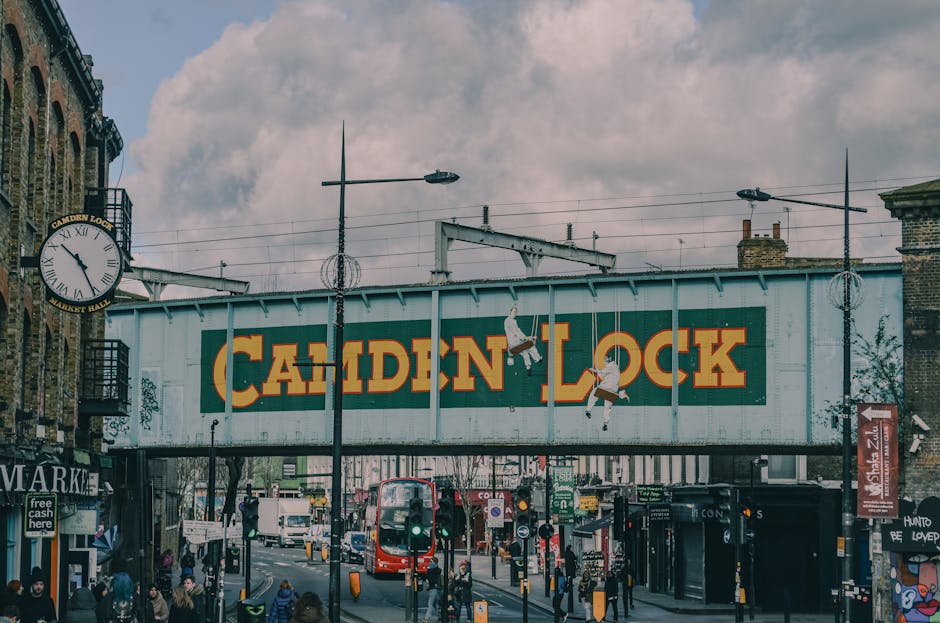

Camden High Street flat removals tips for tight access
Posted on 16/07/2026
Moving out of a flat on Camden High Street can feel a bit like solving a puzzle while someone keeps moving the pieces. Narrow stairwells, awkward door swings, busy pavement space, shared entrances, and the usual London parking fun can turn a straightforward move into a proper logistical job. If you are looking for Camden High Street flat removals tips for tight access, you are probably dealing with one of those homes where every centimetre matters.
The good news? Tight access does not mean a difficult move has to become a stressful one. With the right planning, the right packing approach, and a sensible moving team, you can get furniture out safely without scratching the walls, blocking the High Street, or losing half the morning to guesswork. In this guide, we will walk through the practical side of moving from compact Camden flats, what really matters on the day, and how to avoid the classic mistakes that slow everything down.
For anyone wanting a broader look at local moving support, it can also help to understand the wider flat removals Camden service options and the full services overview before you book. That way you are choosing based on access, size, timing, and not just price alone.
Expert summary: The best tight-access move is rarely the one with the biggest van. It is the one with the cleanest plan, the lightest loads, and the fewest surprises at the front door.

Why Camden High Street flat removals tips for tight access matters
Camden High Street is lively, busy, and not designed with easy moving days in mind. That is not a criticism; it is just the reality of central London living. Many flats around the area sit above shops, sit close to the pavement, or have shared stairways that are narrow enough to make a sofa look suddenly enormous. Even a decent-sized wardrobe can become a problem if the turn at the landing is awkward or the hallway is full of corners, pipes, or old banisters.
Tight access matters because it affects almost everything: how long the move takes, what vehicle size works, whether items need dismantling, how many hands are needed, and whether you can do it in one trip or several. If you get access wrong, you often end up with waiting time, extra lifting, frustrated neighbours, and that sinking feeling when a bed frame simply will not pivot through the doorway. Truth be told, that is where a lot of removals become more expensive than expected.
This is also why local knowledge helps. A crew that understands Camden flats will usually expect narrow entrances, busy loading conditions, and the occasional "this looked bigger in the hallway" moment. If you are comparing providers, it is worth looking at a team's about us information and checking how they handle awkward access, not just how fast they say they work.
There is another reason this topic matters: protecting the building. In older Camden properties, walls, railings, and stair edges can be scuffed very easily. One clumsy move can leave a mark that everyone notices on the way out. No one wants that awkward conversation with a landlord or managing agent before the deposit has even been settled.
How Camden High Street flat removals tips for tight access works
Think of tight-access removals as a process of reducing friction before the van even arrives. The actual lifting matters, yes, but the job is usually won or lost in the preparation. The aim is to remove uncertainty from the route: from the flat door, through the stairwell or lift, out to the pavement, and into the vehicle.
In practical terms, this usually works in four stages. First, you assess the property access. Then you decide which furniture needs dismantling or additional handling. After that, you pack and label items so the move can stay organised. Finally, you choose the right vehicle and moving method for the space available. Simple on paper, less simple in real life, especially if the staircase is a bit of a squeeze and the parking bay is already occupied by a delivery van.
For some homes, a smaller vehicle and a carefully loaded route will be better than a large removal lorry. That is where services like a man and van Camden option can be useful, particularly when access is limited and items need to be moved in a controlled, flexible way. For other homes, especially if there are heavier or awkward items, a more structured move may make more sense.
It also helps to think in terms of load order. The items that are hardest to manoeuvre should usually be planned first, not last. If your sofa will only fit through the hallway when it is stood on end, that needs to be part of the plan, not a surprise on the doorstep at 10:15 on moving day.
Key benefits and practical advantages
Getting tight access right saves more than time. It protects your belongings, your building, and frankly your nerves. That sounds obvious, but the difference between a planned move and an improvised one can be huge.
- Less damage risk: You reduce knocks to walls, banisters, floors, and furniture edges.
- Faster loading: When the route is prepped, everything moves with less stopping and starting.
- Better cost control: Fewer delays and fewer "we need to come back for that" moments.
- Less stress: A clear plan means the moving day feels manageable rather than chaotic.
- Cleaner coordination: Everyone knows what is happening and in what order.
There is also a surprisingly practical benefit: smaller, tighter access moves often become more efficient when they are stripped back to essentials. That might mean fewer boxes, smarter packing, or temporary storage for items you do not need immediately. If that sounds useful, a service like storage Camden can help ease the pressure when your new flat is not quite ready for everything at once.
Another big plus is flexibility. Camden High Street can be busy at all sorts of odd times, and a move that avoids the worst traffic window is often much smoother. Early starts can feel brutal, but they do tend to beat a pavement full of shoppers, cyclists, and the occasional impatient taxi.
Who this is for and when it makes sense
This kind of planning is for anyone moving from a flat with limited access, but some situations benefit from it more than others.
- Top-floor flat residents: Particularly if there is no lift, or the lift is too small for larger pieces.
- Students: Camden student lets often involve stairs, shared entrances, and compact rooms. If that sounds familiar, student removals Camden may be the right fit.
- Renters leaving furnished flats: Furniture may be bulky, but access might be even tighter than expected.
- People with awkward furniture: Wardrobes, beds, glass tables, and corner sofas can all need special handling.
- Anyone moving on a strict schedule: If you have a check-out time, completion deadline, or same-day turnaround, you cannot afford guesswork.
It also makes sense if you are moving during busier periods, such as weekends or month-end dates, when lift bookings, parking, and hallway access tend to feel more limited. And if you are in a mixed-use building near Camden High Street, shared access can be a little unpredictable. One resident is carrying shopping bags, another is bringing in a buggy, and suddenly the stairwell becomes a bottleneck. Happens all the time.
If you are unsure whether your move needs a smaller-scale service or something broader, it may help to compare man with a van Camden, man with van Camden, and more complete removal services Camden options before deciding.
Step-by-step guidance
Here is the cleanest way to approach a tight-access flat move on Camden High Street.
- Measure the awkward bits first. Do not just measure the rooms. Measure door widths, stair turns, lift interiors, banister gaps, and any hallway pinch points. If a mattress can make it through only when turned diagonally, you need to know that before moving day.
- List the large items. Sofas, beds, wardrobes, dining tables, desks, and anything with glass should be treated as potential access problems until proved otherwise.
- Decide what can be dismantled. A bed frame that comes apart cleanly is far easier to move than one forced through at a bad angle. Same with some wardrobes and desks.
- Pack small and label clearly. Tight access moves work better when boxes are manageable. A stack of overfilled boxes is the last thing you want on a narrow stairwell.
- Check parking and loading space. You may not need a huge vehicle, but you do need a sensible spot to load and unload without blocking the whole street.
- Protect the route. Use covers, blankets, and floor protection where needed. It sounds a bit fussy until the first scrape appears on a painted wall.
- Place essentials aside. Keep documents, chargers, keys, toiletries, and first-night items separate so they are not buried in the van.
- Confirm timing with the moving team. A ten-minute misunderstanding about access can turn into a half-hour delay very easily.
One small but useful habit: take photos of your most difficult access points. A staircase corner, the front entrance, the lift interior, the building doorway. Those images often explain the problem faster than a long message ever could. Not glamorous, but effective.
Expert tips for better results
In our experience, the best Camden moves are usually the ones that look almost boring on the day. That is a compliment. Boring means organised. Organised means fewer surprises.
1. Move the biggest items first in your planning
Big items shape the rest of the move. If a sofa or wardrobe is not going to fit through the hallway without a smart angle, you need to know early. It may sound obvious, but people often pack every box before thinking about the furniture. Then the room is full, the route is blocked, and the problem gets bigger. Bit late then.
2. Use smaller, stronger boxes
Heavy boxes are a nightmare in stair-heavy buildings. Smaller boxes are easier to grip, easier to lift, and less likely to burst in a tight landing. Books, kitchenware, and files should never be crammed into one monster box just because it feels efficient.
3. Keep the corridor clear
A narrow hallway can become unusable very quickly. Leave a clear line from the room to the exit. Even a couple of stray bags can slow a move when people are turning corners with furniture.
4. Plan around neighbours and building rhythms
If your building tends to be busiest at school-run time, lunchtime, or the evening rush, factor that in. It is not just about traffic outside. It is also about the natural flow of people inside the building.
5. Ask what the team can dismantle and rebuild
Some furniture removals are much easier when certain items are partially taken apart. If you are moving something valuable or awkward, it is worth discussing this in advance. For items that are especially delicate or heavy, a specialist service such as furniture removals Camden can be a sensible choice.
6. Keep a "first hour" bag with you
Think kettle, mugs, phone charger, toilet roll, snacks, and a change of clothes. Small thing, big relief. By late afternoon, you will thank yourself.

Common mistakes to avoid
A lot of problems on tight-access moves are preventable. They are usually not dramatic mistakes, just small oversights that stack up.
- Underestimating staircase width: A hallway that looks fine empty may be much less fine with a double mattress or tall cabinet in it.
- Not checking lift size: Some lifts are technically there, but too small to be genuinely useful for larger items.
- Overpacking boxes: Heavy boxes slow everything down and make carrying through narrow spaces riskier.
- Ignoring parking reality: If the vehicle cannot stop near the entrance, the move becomes longer and more tiring.
- Forgetting building rules: Some blocks have quiet hours, lift booking rules, or access arrangements that need notice.
- Leaving dismantling until the last minute: Once the room is full of bags and boxes, it is much harder to take furniture apart safely.
- Choosing a vehicle that is too large: Bigger is not always better on Camden High Street. In some cases, a removal van Camden setup is better than a huge lorry, but only if access and loading space match the plan.
One more thing: do not assume every mover will automatically know how to handle a tight entrance. Some will, some won't. Ask direct questions. A good team will not mind. In fact, they should welcome it.
Tools, resources and recommendations
You do not need a van full of specialist gear to make a tight-access move work, but a few tools and supports help a lot.
| Tool or support | What it helps with | When it is most useful |
|---|---|---|
| Furniture blankets | Protecting doorframes, walls, and item surfaces | When carrying bulky or delicate pieces |
| Straps and tie-downs | Keeping loads secure in transit | For mixed loads or taller items |
| Small boxes | Reducing weight on stairs | For books, crockery, and dense items |
| Dismantling tools | Breaking down beds or furniture | Before the van arrives, ideally |
| Floor protectors | Reducing scuffs in hallways | On painted floors, hardwood, or rental properties |
| Temporary storage | Splitting the move into manageable parts | When the destination is not ready for everything at once |
For packing materials and box options, it is worth looking at packing and boxes Camden and package and boxes Camden so you are not scrambling for supplies the night before. That late-night tape hunt, honestly, is never as funny as it sounds.
If your move is time-sensitive, you might also want to compare same day removals Camden with more planned options. Same-day help can be useful, but only when the access situation is clearly understood. Fast is useful. Fast and rushed is another story.
Law, compliance, standards, or best practice
Moving a flat on Camden High Street is not usually about legal complexity, but there are still practical rules and best practices worth respecting. If you are using communal areas, you should follow building management instructions where they exist. That may mean booking a lift, keeping escape routes clear, or only moving during agreed hours.
Health and safety matters too. Moving heavy items through narrow spaces creates obvious risks: trips, strains, dropped objects, and scratches to the property. A professional approach should include proper lifting technique, sensible team sizes, and the right equipment for the job. If you want a clearer idea of how a reputable mover approaches this, the site's health and safety policy and insurance and safety information are useful places to review.
For rental properties, it is sensible to document the condition of the flat before moving heavy items out. That is just good practice, not drama. A few photos can help prevent misunderstandings later. Also, if you are moving in a block with accessibility needs, keep access routes practical for others while you work. It is a small courtesy, but one that matters in a busy neighbourhood.
Reputation and trust also count. If you are choosing a mover, look for clear information about how they work, how they handle complaints if something goes wrong, and how they manage payment and security. A company that is transparent on these points is usually easier to deal with, full stop.
Options, methods, or comparison table
Different access problems call for different moving methods. There is no single magic answer. The best choice depends on how tight the access is, how much furniture you have, and whether you need speed or flexibility more.
| Method | Best for | Pros | Trade-offs |
|---|---|---|---|
| Man and van | Smaller flats and flexible access | Easy to manoeuvre, often quicker to position | May need more trips for larger loads |
| Full removals service | More furniture, more boxes, more structure | Better coordination and handling support | May be more than you need for a very small move |
| Storage-first move | When the new flat is not ready or access is limited at both ends | Reduces pressure and makes timing easier | Requires an extra step and possibly extra cost |
| Split move | Heavy or awkward access, or mixed urgency items | Lets you move essentials first and large items later | Needs careful planning and duplicate coordination |
If you are still deciding between options, the wider removals Camden page can help you understand how different move types fit different property sizes. For some people, a focused service is enough. For others, it is smarter to build in support from the start rather than trying to improvise half-way through.
Case study or real-world example
Picture a second-floor flat on Camden High Street with a narrow staircase, a shared front door, and just enough landing space to make turning furniture feel a little theatrical. Nothing wildly unusual, but definitely not the kind of move where you can just carry a three-seater sofa out and hope for the best.
In a move like that, the sensible approach is usually to strip down the larger items, pack everything into smaller boxes, and keep the route clear from the flat door to the pavement. If the sofa can be removed in sections, that helps. If not, you plan the carry carefully, with one person guiding and one or two people managing the lift. The van is parked close enough to reduce walking distance, but not so large that it blocks traffic or becomes difficult to unload from. Nice and plain. No heroics.
What tends to make this sort of job work is not brute force. It is preparation. The team knows the door width. They know the landing is tight. They know where the awkward turn is. So when moving time comes, nobody is guessing. It feels calmer, quicker, and less tiring. And yes, there is often a point where everyone steps aside for twenty seconds to let a neighbour through with shopping. Camden does not stop being Camden just because someone is moving house.
That is the main lesson really: tight access rewards people who think ahead. If you are careful with the route, the packing, and the timings, the actual move becomes much more manageable than it first looked.
Practical checklist
Use this before moving day, ideally the day before if you can.
- Measure doors, stairs, landings, and lift dimensions.
- Check which large items must be dismantled.
- Pack heavy items into smaller boxes.
- Label boxes clearly by room.
- Leave a clear path from each room to the exit.
- Confirm parking and loading access.
- Protect walls, floors, and furniture surfaces.
- Set aside essentials for the first night.
- Notify building management if needed.
- Take photos of any existing marks or access concerns.
- Confirm timing with your moving team.
- Keep keys, documents, and chargers with you.
If your move also involves a piano, don't guess your way through it. That is one item where the wrong approach can get expensive very quickly. A specialist like piano removals Camden exists for a reason.
And if you care about waste reduction, donate, reuse, or recycle anything you no longer need. The company's recycling and sustainability information is worth a look when you are deciding what to keep, pass on, or dispose of responsibly.
Get a free quote today and see how much you can save.
Conclusion
Moving from a Camden High Street flat with tight access is absolutely doable. It just asks for more thought than a standard move. Measure carefully, pack lightly, dismantle what you can, and choose a moving method that suits the building rather than fighting it. That one shift in mindset makes a bigger difference than most people expect.
If you are planning a move soon, the smartest thing you can do is stop treating access as a side note. It is the main event. Once you respect that, everything else becomes easier to organise. And on a busy London street, easier is worth a lot.
For more background on the company and the way it works, you can also review the about us page and, if needed, get in touch through the contact page when you are ready to talk details.
With the right plan, even the tightest Camden move can feel surprisingly manageable. One careful step at a time, that is usually how it goes.